
Balanced Recipes for Halloween
Cereal Treats After Dark
Halloween treats can be fun, sweet, and still nutritious! These crispy cereal treats put a fresh spin on a nostalgic favorite with whole-grain cereal for added fiber, a little plant-based protein from nut butter, and two delicious flavor combinations. They’re still very much a sweet treat, just with a few extra nutrients in the mix. Whether you gravitate toward the warm spices and nutty crunch of sesame ginger or the rich chocolate and tart cherry combination, these seasonal treats highlight that healthier choices and enjoyment can share the same plate.
Recipe of the Moment
Cereal Treats After Dark
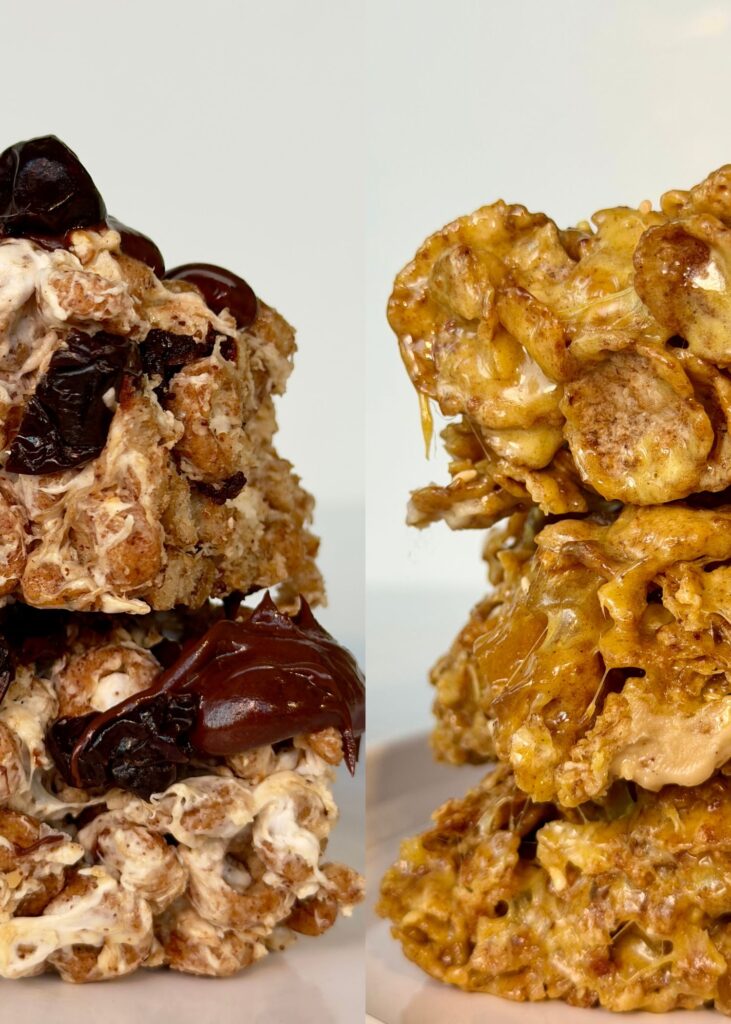
Golden Hour Sesame Ginger | Midnight Cherry Dark Chocolate
A crispy treat two ways: Golden Hour Sesame Ginger combines creamy cashew butter with toasted sesame seeds and crystallized ginger, while Midnight Cherry Chocolate pairs almond butter with tart dried cherries and dark chocolate. Both variations start with the same simple cereal-and-marshmallow base, making them easy to prepare for a Halloween gathering or a cozy fall treat.
How to Choose a Healthier Cereal
We chose Cascadian Farm No Added Sugar cereal for these treats because it provides a crispy base made with whole grains, without added sugar in the cereal itself. The whole grains also contribute fiber, adding a little more nutritional value to this sweet take on a classic.
What to look for when shopping for cereal:
- Whole grains: Look for whole grains near the beginning of the ingredient list. This could be oats, whole wheat, brown rice, barley, quinoa, millet, and whole-grain corn. Words like “multigrain” or “made with whole grains” don’t necessarily mean a product is 100% whole grain.
- Fiber: Compare grams of fiber per serving. Fiber supports digestive health, and pairing fiber-rich foods with foods higher in sugar may help moderate the rise in blood sugar, depending on the type and amount of fiber and the overall meal or snack. A food that provides at least 20% of the Daily Value for fiber per serving (5.6 grams, based on a 28-gram DV) qualifies as an excellent source of fiber.
- Added sugar: Check the Nutrition Facts label to compare added sugars. As a general guide, 2.5 grams or less per serving is considered low in added sugars. Choose an amount that fits your preferences and remember that naturally occurring sugars, such as those in fruit and dairy, are different from added sugars.
- Ingredients you enjoy: Choose a cereal you’ll look forward to eating, whether in a recipe or straight from the bowl. Taste and texture matter, too!
How These Compare to Traditional Cereal Treats
Traditional crispy rice treats typically combine crisped rice cereal, marshmallows, and butter. These versions keep the familiar chewy, crunchy texture while adding nut butters, seeds, and flavorful mix-ins.
- Nut butters: Almond and cashew butters contribute plant-based protein, unsaturated fats, and other nutrients.
- Seeds and fruit: Sesame seeds add crunch and minerals, while dried cherries contribute fruit flavor and some fiber.
- Whole grains: The cereal provides whole grains and fiber, which are often limited in traditional cereal treats.
These are still a dessert, and that’s part of the fun. By choosing ingredients thoughtfully, we added a little extra nutrition variety to a familiar favorite without taking away what makes it a sweet treat!

The Balanced Basket
is a dietitian-led program designed to make healthy eating simple, enjoyable & easy. One balanced basket at a time. Look for callouts throughout our stores that highlight expertly curated products each month. Visit this page for delicious recipes each month, as we empower every gustomer to build feel-good nutrition habits.
Recipe Archive
Mains
- Apple, Cheddar & Parsley Pesto Flatbread
- Pear & Oat Pancake Bake
- Napa Harvest Grain Bowl
- Veggie Mac & Cheese
- Zucchini & White Bean Skillet
- Pan-Seared Salmon with Fresh Peach & Tomato Salsa
- Gus’s Balanced Burger
- Beans and Greens Garden Salad
- Chicken Salad with Blueberries & Pepitas
- Smoked Salmon Bowl
- Miso-Citrus Soba Noodles
- Summer Tomato & Charred Corn Pasta with Sweet & Spicy Ricotta